LightPRO Shell - BioMat Pavilion 2021
PROJECTS - CITY INSTALLATIONS
Location:
University of Stuttgart’s Campus
in Stuttgart’s city center.
Project Type:
Exhibition
Completion Date:
2021
Team:
BioMat Team
Area:
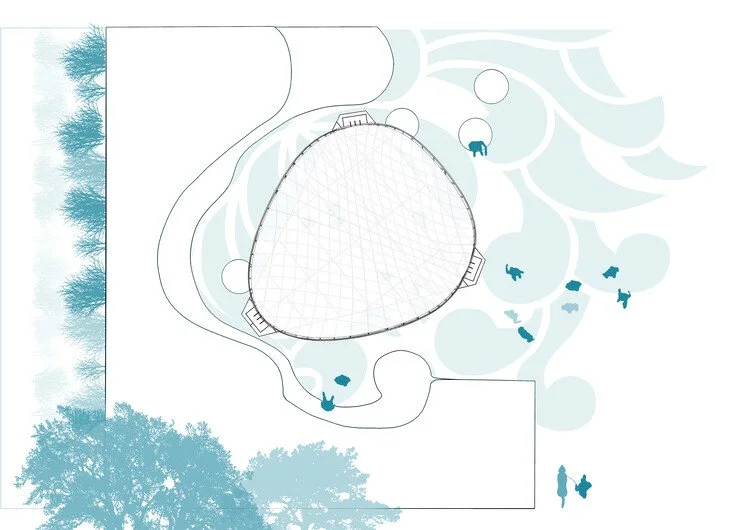
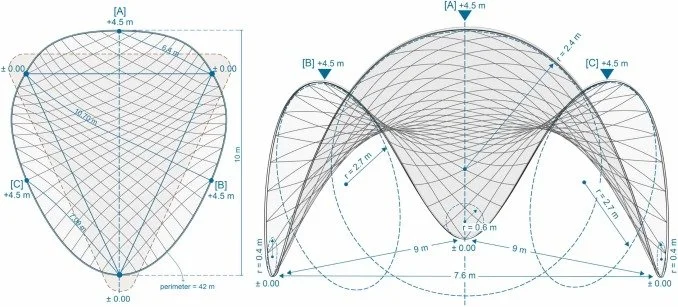
The target geometry aims to cover an area of approximately 10 by 10 m with a span of 10m and maximum height of 4.8m at the perimeter.
Scope of Work:
Research, design, and construction
Materials Used:
Pultruded profiles of natural flax and hemp fibers and tensile membrane
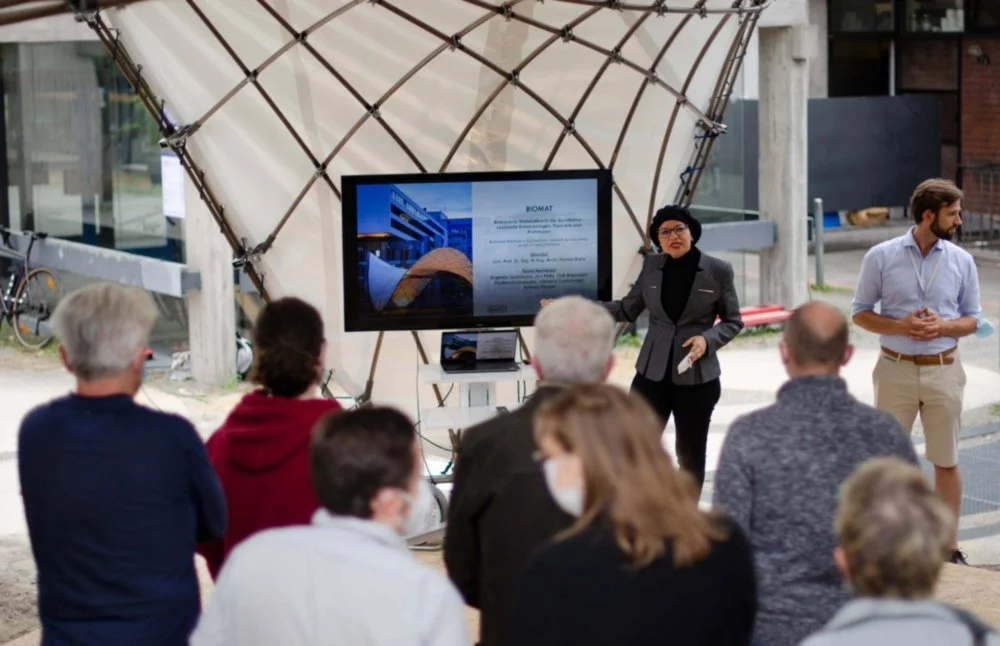
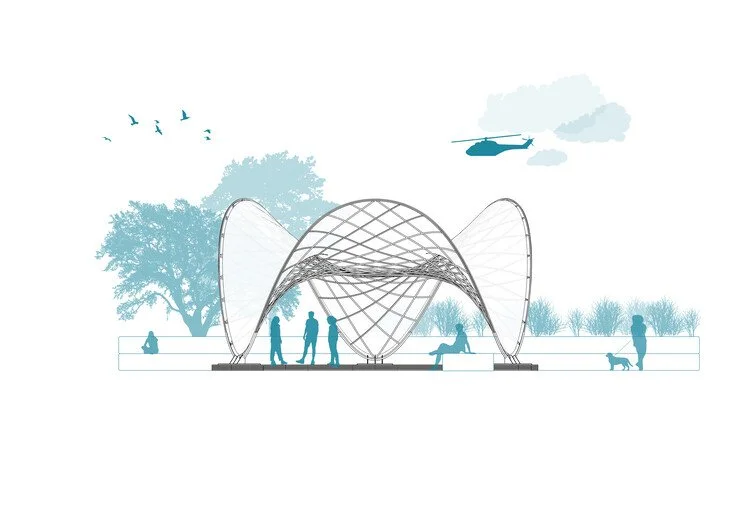
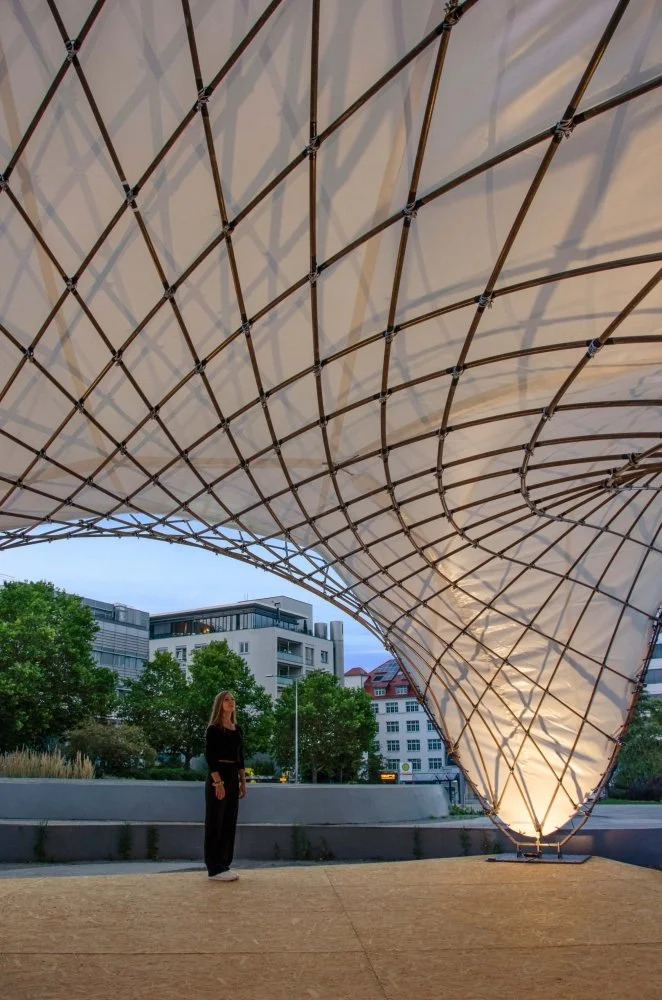
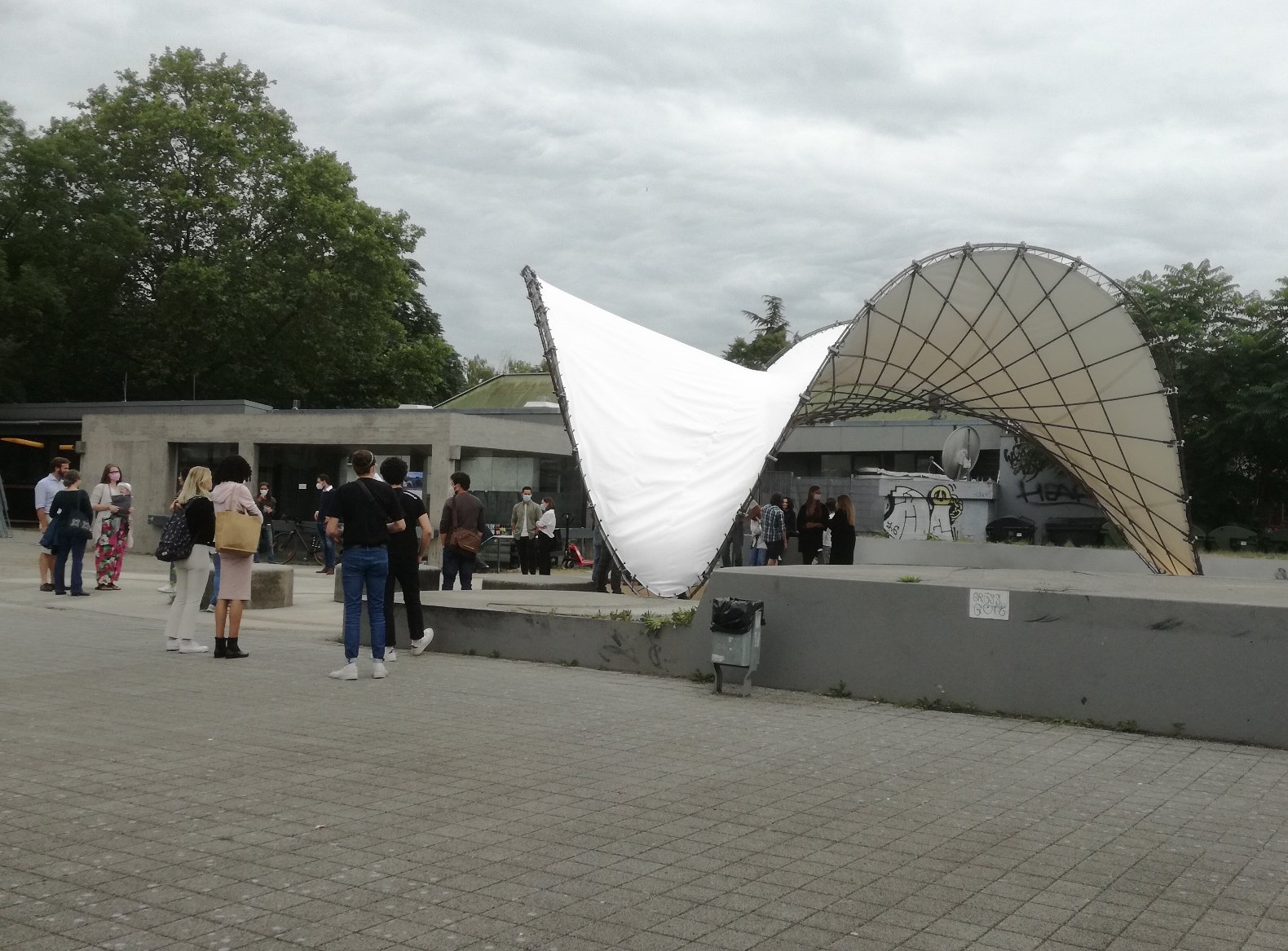
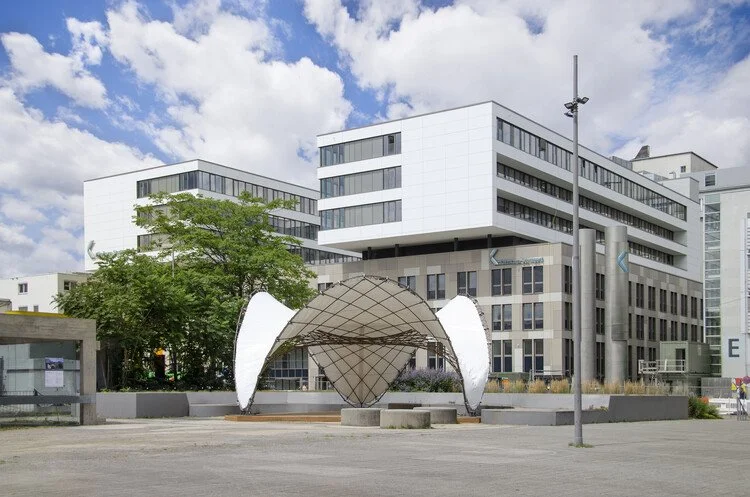
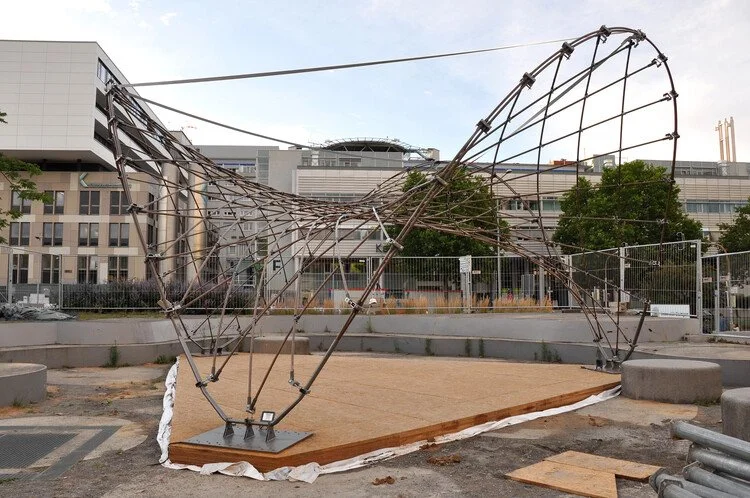
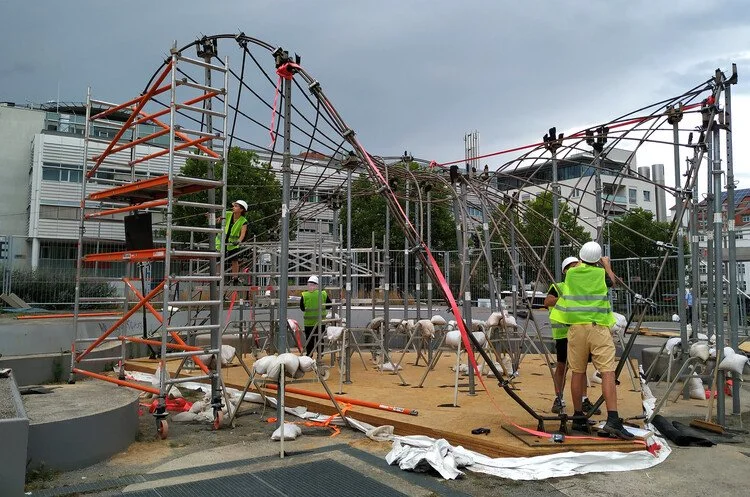
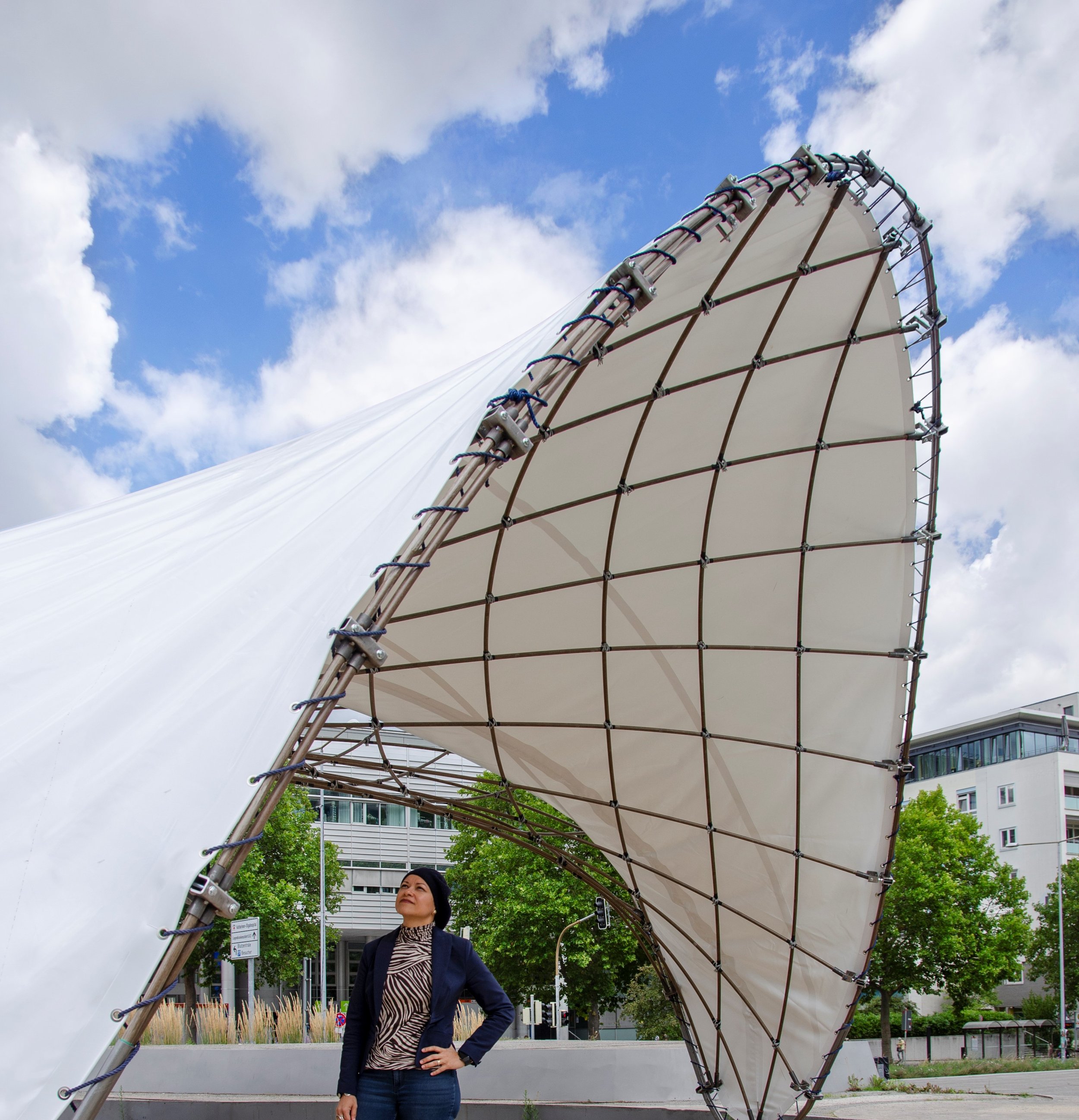
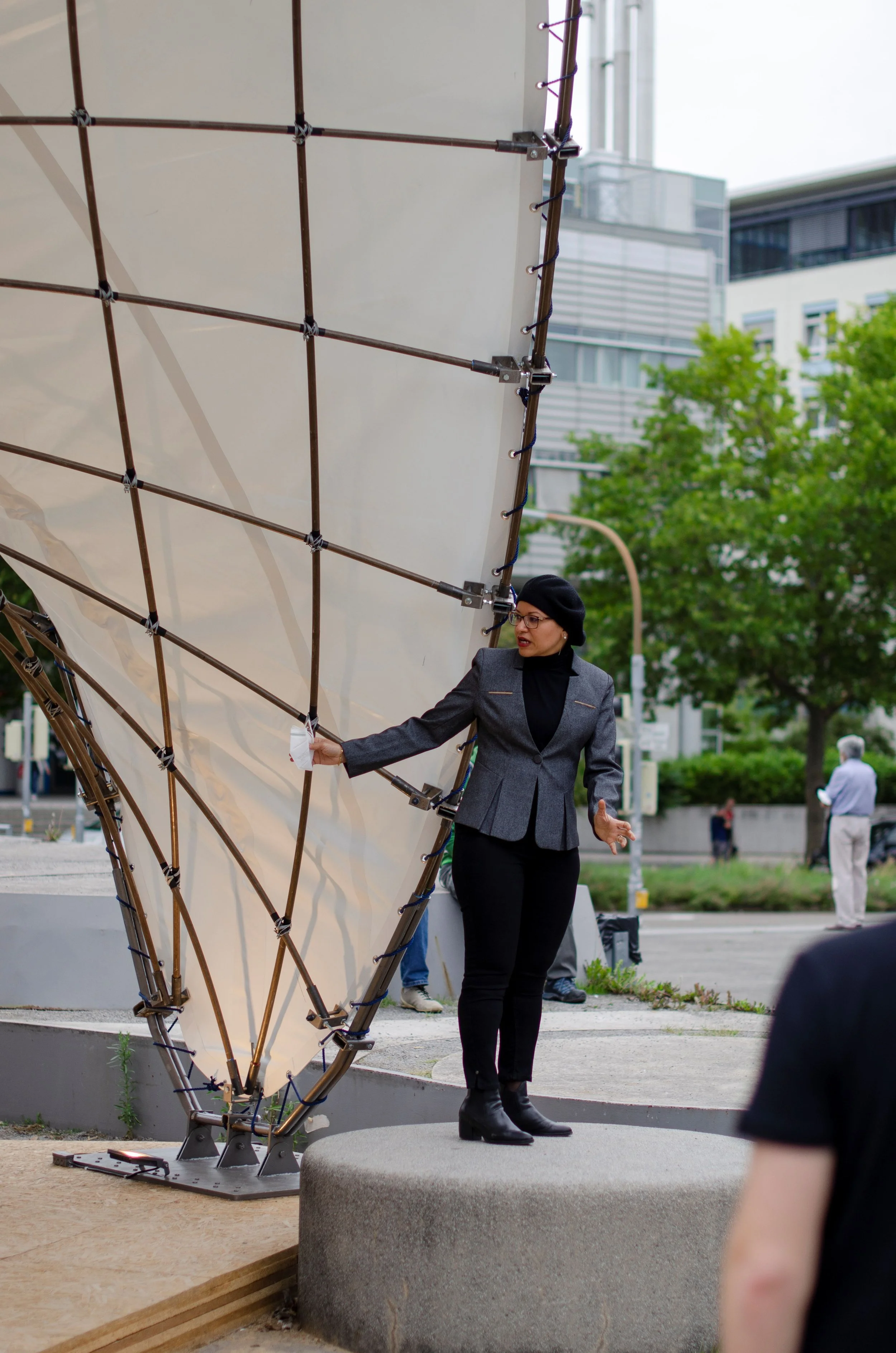
The LightPRO Shell Pavilion is a lightweight architectural structure that integrates an active-bending gridshell made from natural fibre biocomposite profiles with a tensile membrane. Together, these two doubly curved surfaces form a continuous structural system defined by a beam-like perimeter, which channels loads from both components to three anchored foundation points. In 2022, it was recognized with the Green Concept Award, and also won the Public Voting award at the Materialpreis 2021.
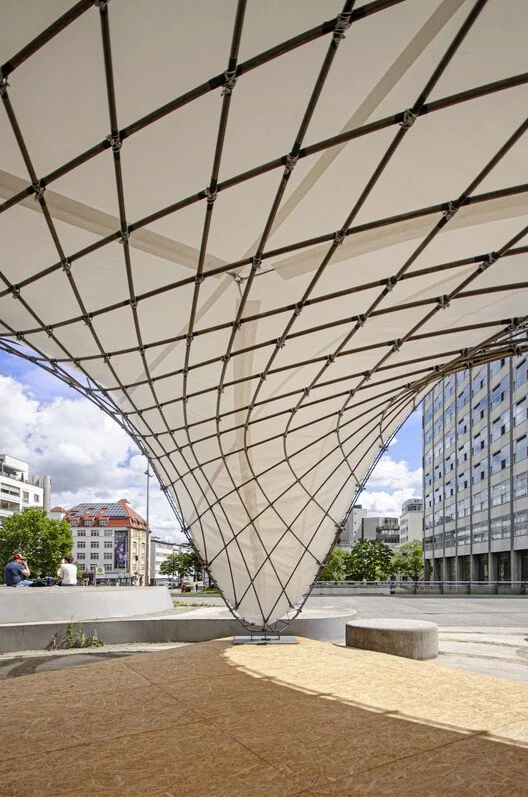
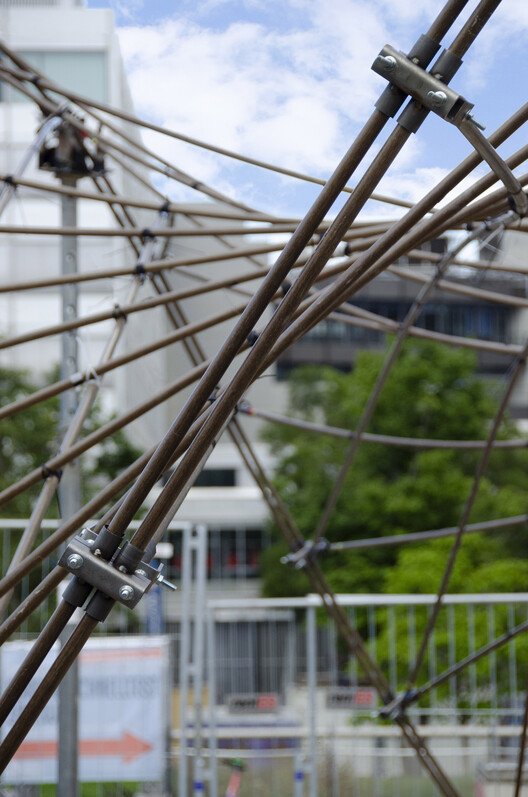
The perimeter beam consists of two joined profiles that act as a unified element for structural force transmission. The biocomposite profiles, reminiscent of bamboo, were newly developed using the pultrusion process—a continuous manufacturing method for fiber-reinforced polymers with a constant cross-section. In this case, natural flax and hemp fibres were used to produce hollow tubes with a 25 mm diameter, 4 mm wall thickness, and lengths ranging from 6.5 to 12.5 meters, designed to meet the pavilion’s 10 m span and 4.8 m perimeter height.
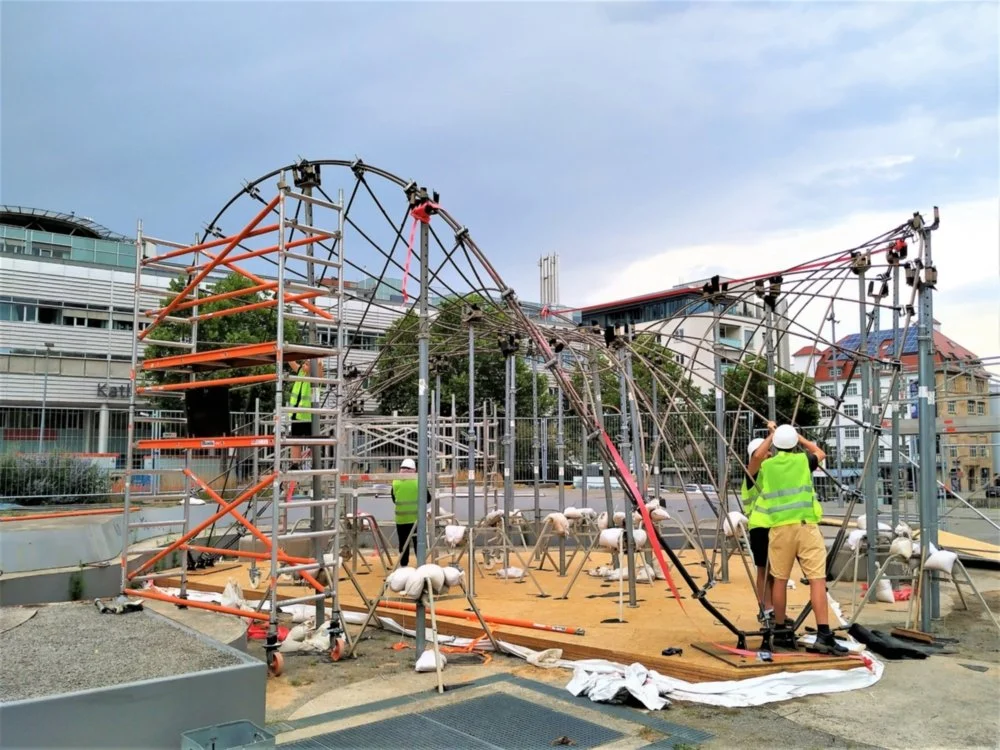
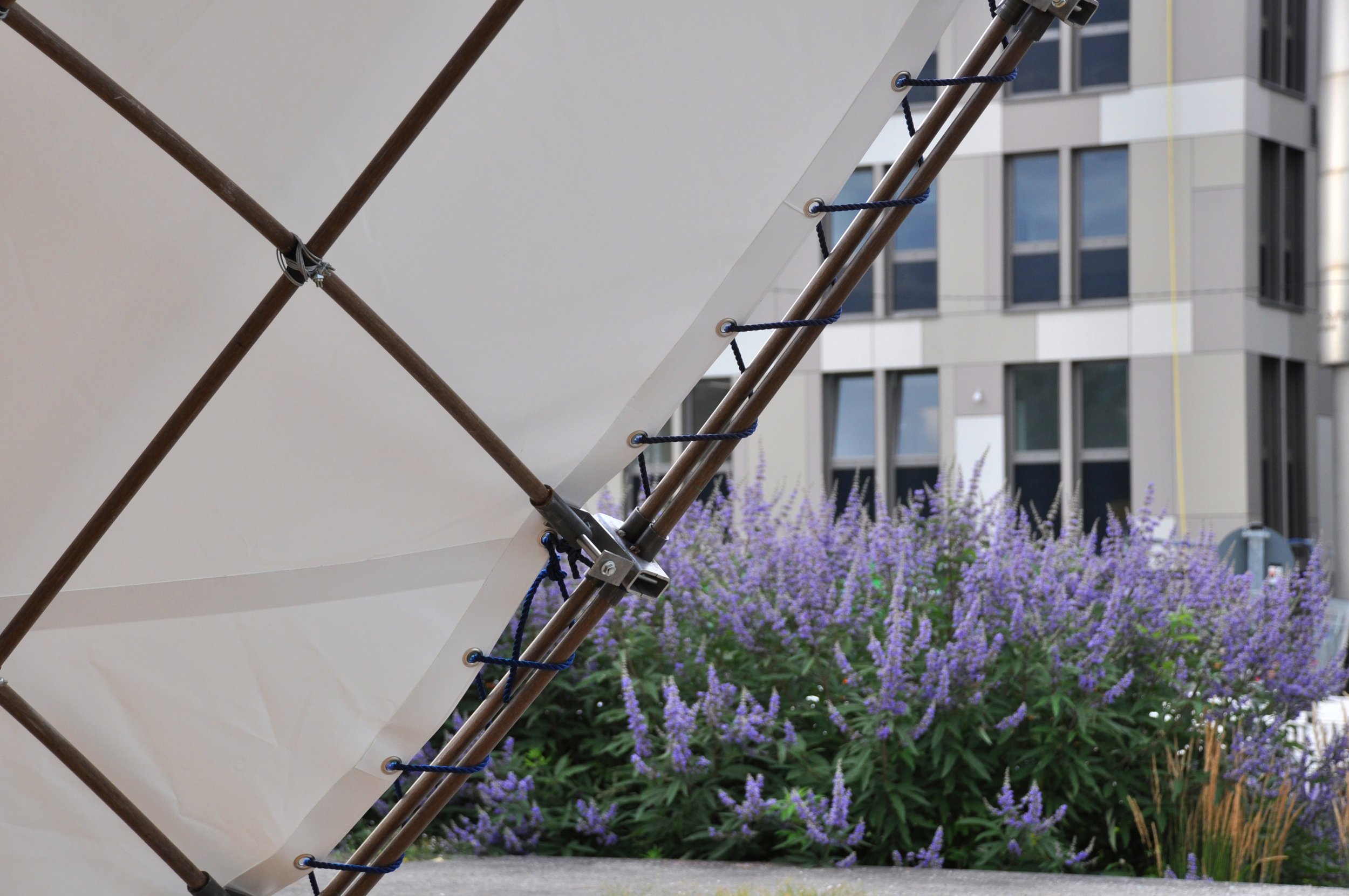
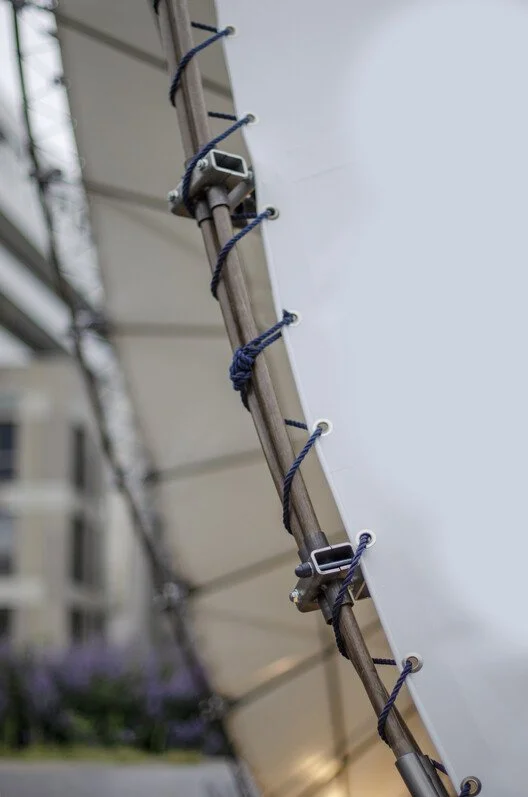
The grid of the shell is assembled using traditional steel cable diagonal lashing, and the customized joints connect it to the beam outline. The tensile membrane is anchored at the same three foundation points and tensioned using rope lacing along the edge.
This pioneering design highlights a sustainable vision for future architecture and is the result of extensive research into bio-based materials. Material development and production were undertaken by DITF, CG-TEC, and BAM, while Zenvision GmbH contributed to the technical design and development. Steinhuder explored bio-based alternatives for connection systems, and Bieri fabricated and sponsored the membrane. The project was developed under the LeichtPRO research initiative, funded by the FNR (Federal Agency of Renewable Resources) and the BMEL (Federal Ministry of Food and Agriculture) under project number FKZ: 22027018.
Gallery
Project Team:
BioMat Director: Assoc.-Prof. Dr.-Ing. Hanaa Dahy
BioMat Team: Evgenia Spyridonos | Dr. Jan Petrš | Piotr Baszyński | Paulina Grabowska
Structural Support: Yanan Guo | Marta Gil Pérez
Geodesy Team: Prof. Dr.-Ing. Volker Schwieger | Gabriel Kerekes
Membrane Support: Bieri GmbH | Technical: Tomas Thommen
Membrane Assembly: Zimmermann Zeltbauten | Technical: Ronald Burgau
Technical support: Michael Preisack | Michael Schneider | Michael Tondera
IntCDC Laboratory: Sergej Klassen| Kai Stiefenhofer
LeichtPRO Project Partners:
Zenvision GmbH: Carsten Fulland | Jacob Börner
DITF: Prof. Dr.-Ing. Markus Milwich | Martin-Uwe Witt | Dr. Mark Steinmann | Patrick Kaiser | Marion Gebhardt
CG-TEC: Andreas Gerstner| Oliver Kipf | Manuel Rupp | Michael Nehmeier
BAM: Dr. Klaus Dippon | Uwe Schönfeld
Steinhuder: Michael Wölfl
Participating students:
Winter Semester (WS 20/21): Dominik Abele | Alexander Jansen | Sarah Rüngeler | Viktoria Schüle| Daniela Solueva | Rita Teixeira | Louisa Teufel| Ekin Şiar Baloğlu
Summer Semester (SS 2021): Matay Kaplan | Fabian Schmid | Vural M. Ali | Larisa Elena Simion | Maysa Abu Alqumboz | Sarah Rüngeler| Dominik Abele| Anastasia Kandylaki
Student assistants: Rita Teixeira | Daniela Solueva | Mahnaz Shahriyari | David Schadwill
Special Thanks to: Asmaa Hassan | Marcel Wachter
Photos by: Masih Imani