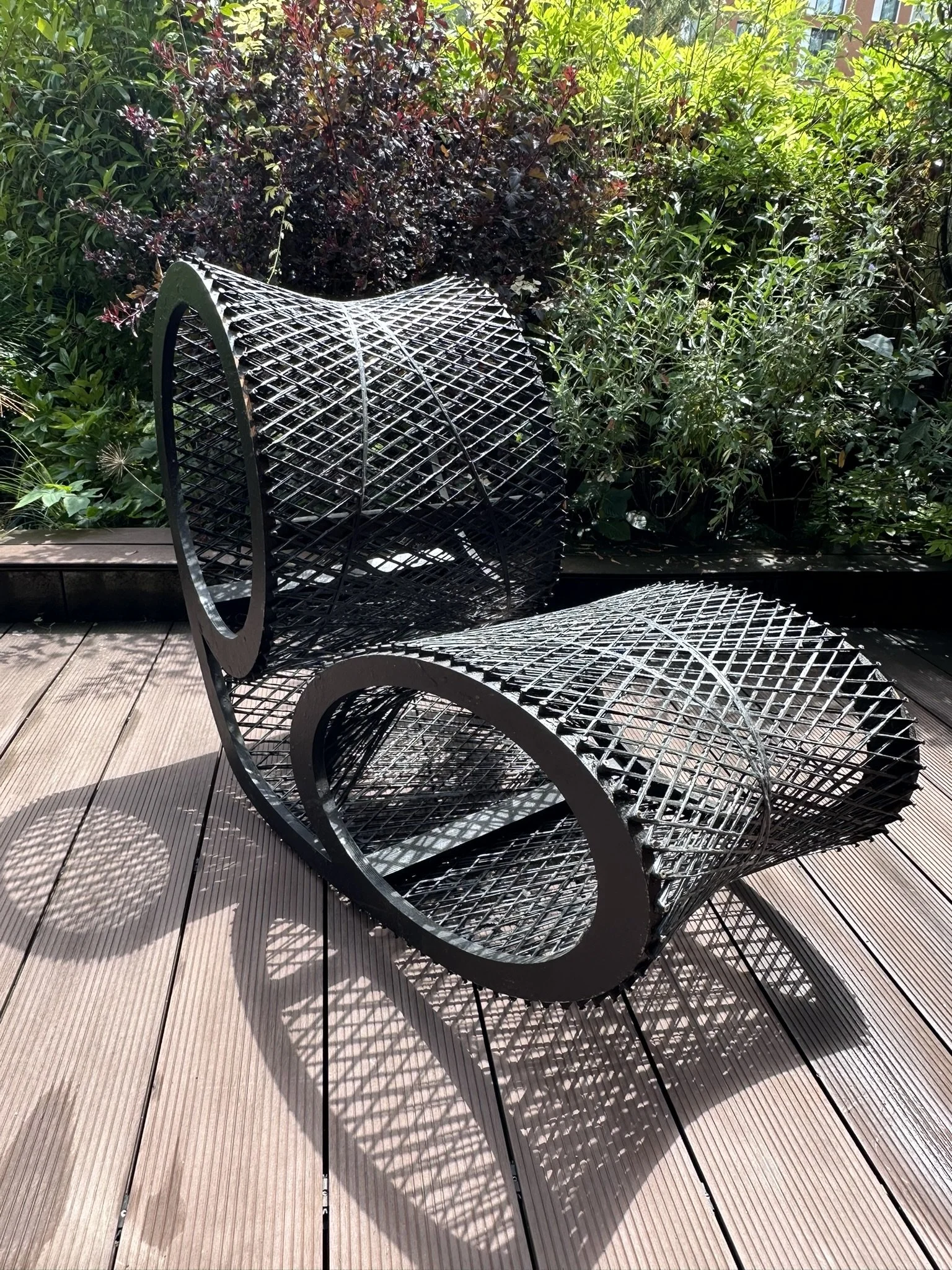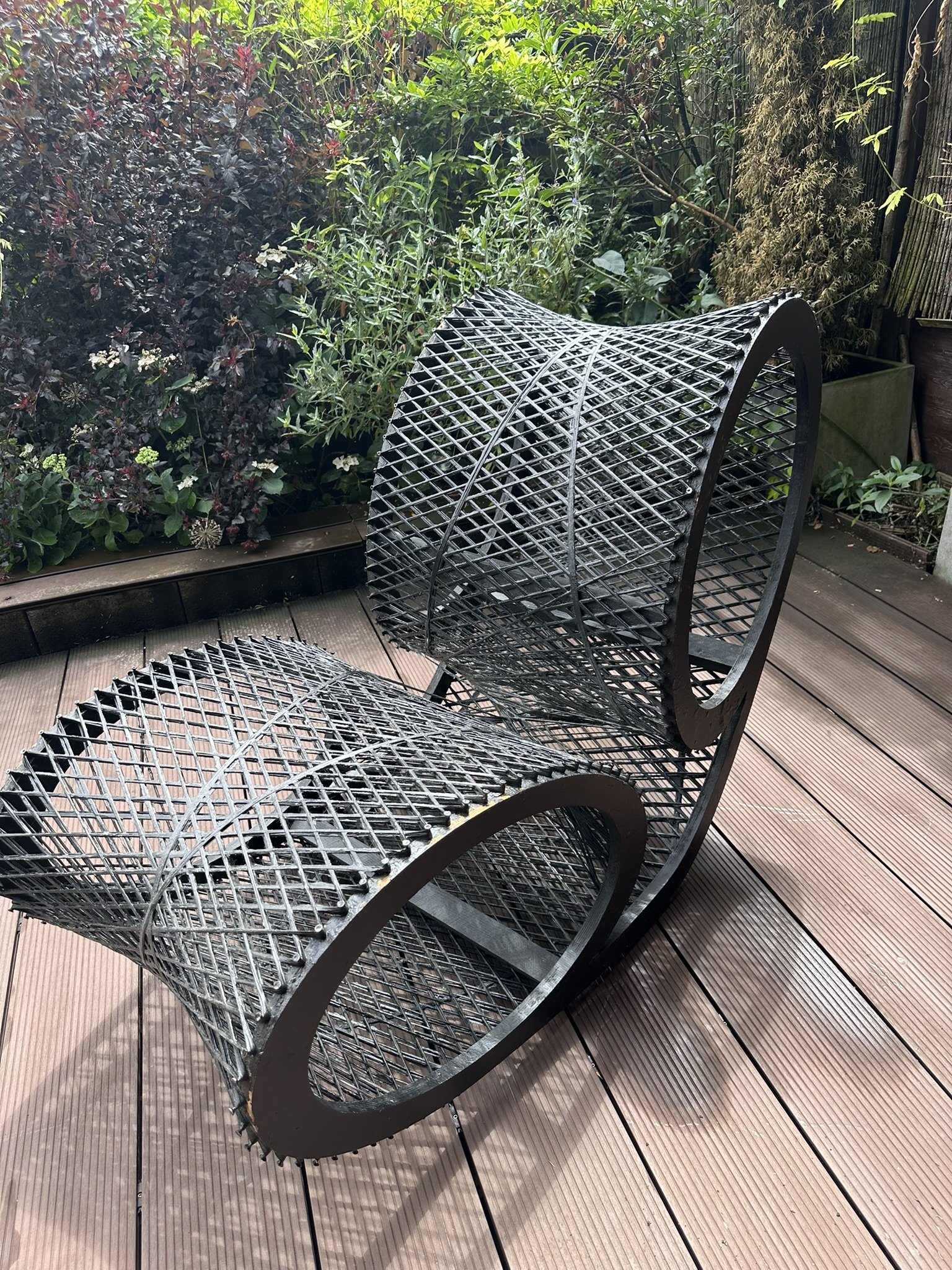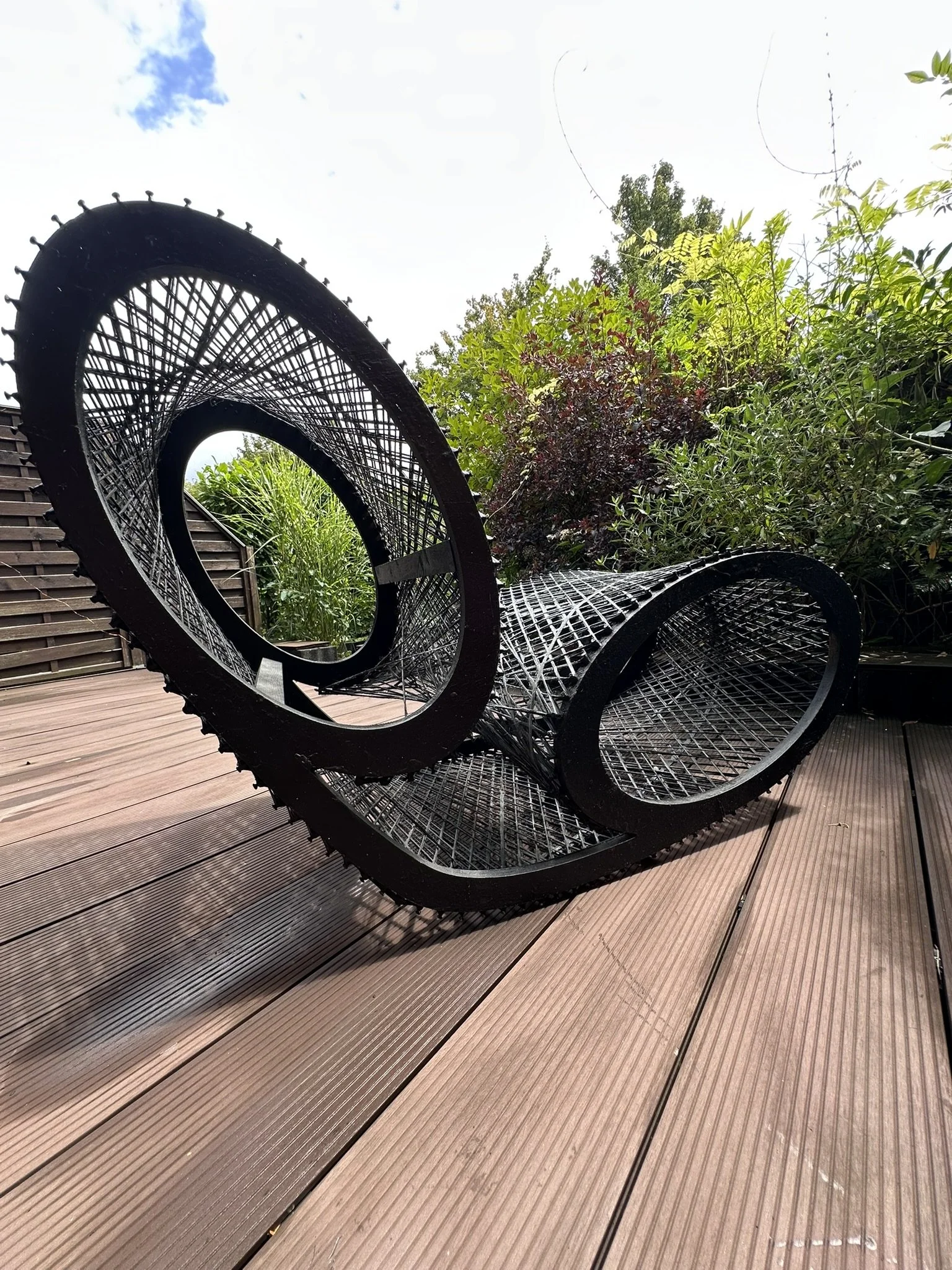

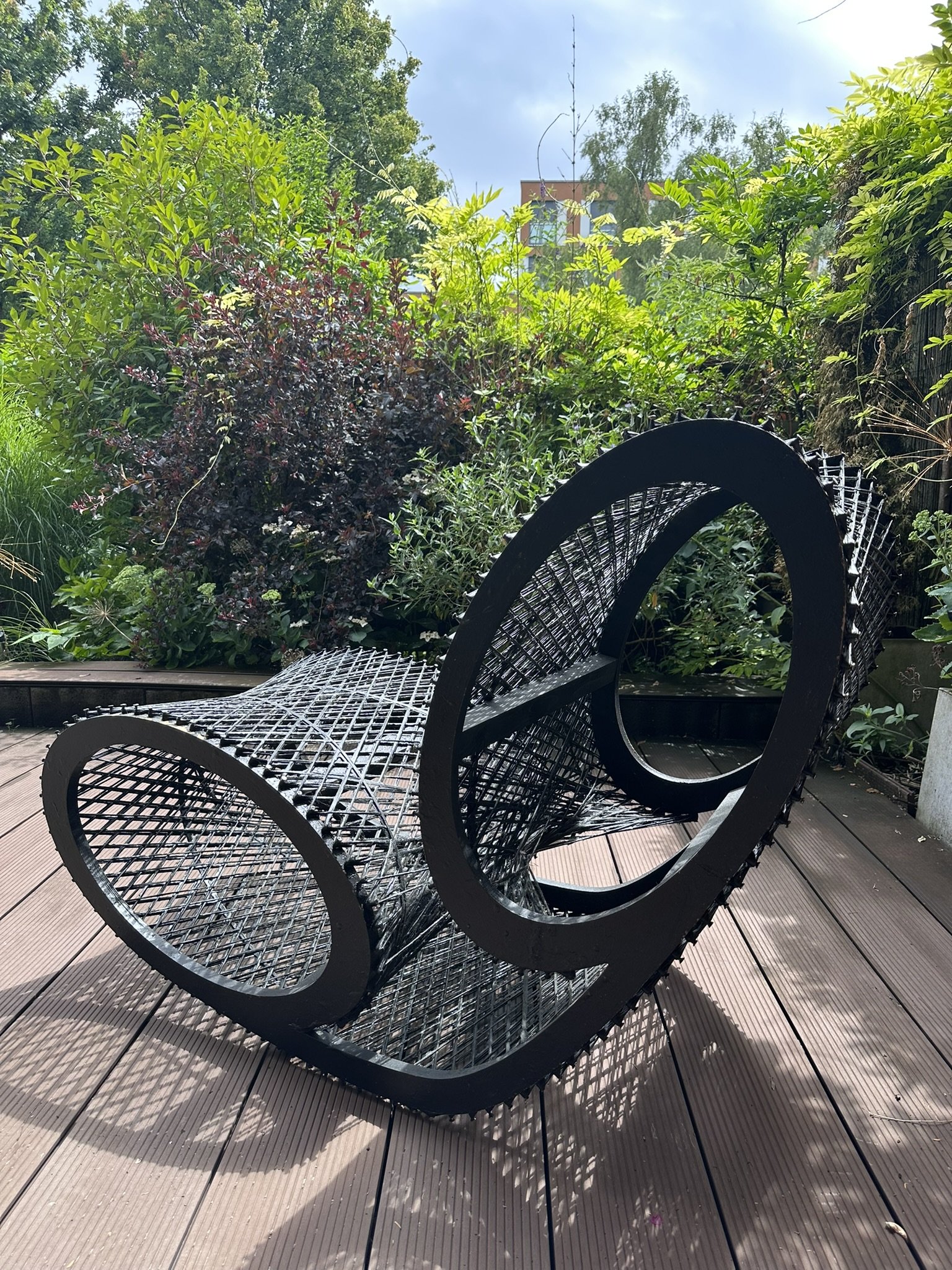
CARBON FIBER LOUNGE CHAIR
The concept for this fiber-composite chair was initially conceived and developed at BioMat Studio, University of Stuttgart, as part of the studio’s ongoing exploration into high-performance lightweight structures and advanced fabrication technologies. The project was developed by students Tania Araujo and Masih Imani Nia during the Material and Structure design studio (SS 2016) at BioMat, under the supervision of Assoc.-Prof. Dr.-Ing. Arch. Hanaa Dahy and tutored by Anja Mader.
The primary aim of the project was to explore the potential of carbon fiber composites in the context of furniture design, taking advantage of the material’s exceptional strength-to-weight ratio and design freedom. The design approach emphasized minimizing material consumption to optimize both structural performance and production cost. While the student version relied on a wooden frame for support, further research was proposed into developing a fully fiber-based structural system capable of withstanding all loads without additional material support.
Additionally, the project identified the potential for robotic fabrication, particularly in applications inspired by automotive manufacturing processes. Robotic precision was seen as a key opportunity to enhance production speed and accuracy. Challenges such as the limited reach of robotic arms in angled or complex geometries were acknowledged, with proposed solutions including design modifications or the development of custom robotic end effectors capable of addressing hard-to-reach areas.
Following the academic phase, BioMat GmbH expanded the concept for real-world development, refining both the material systems and robotic strategies. The goal was to transition the prototype into a scalable, fabricable solution for lightweight structural furniture and to continue exploring its integration into architectural components through advanced digital manufacturing.