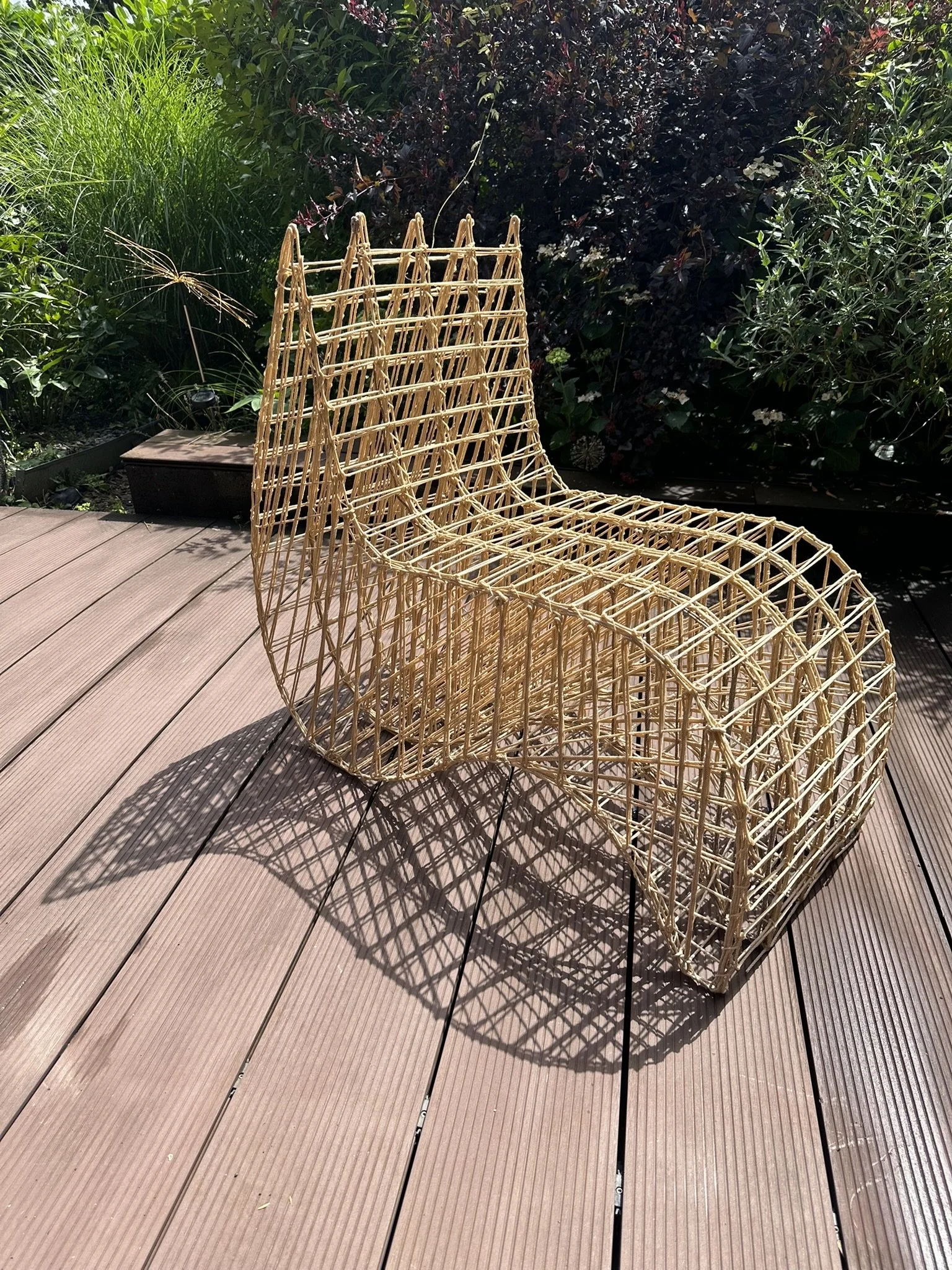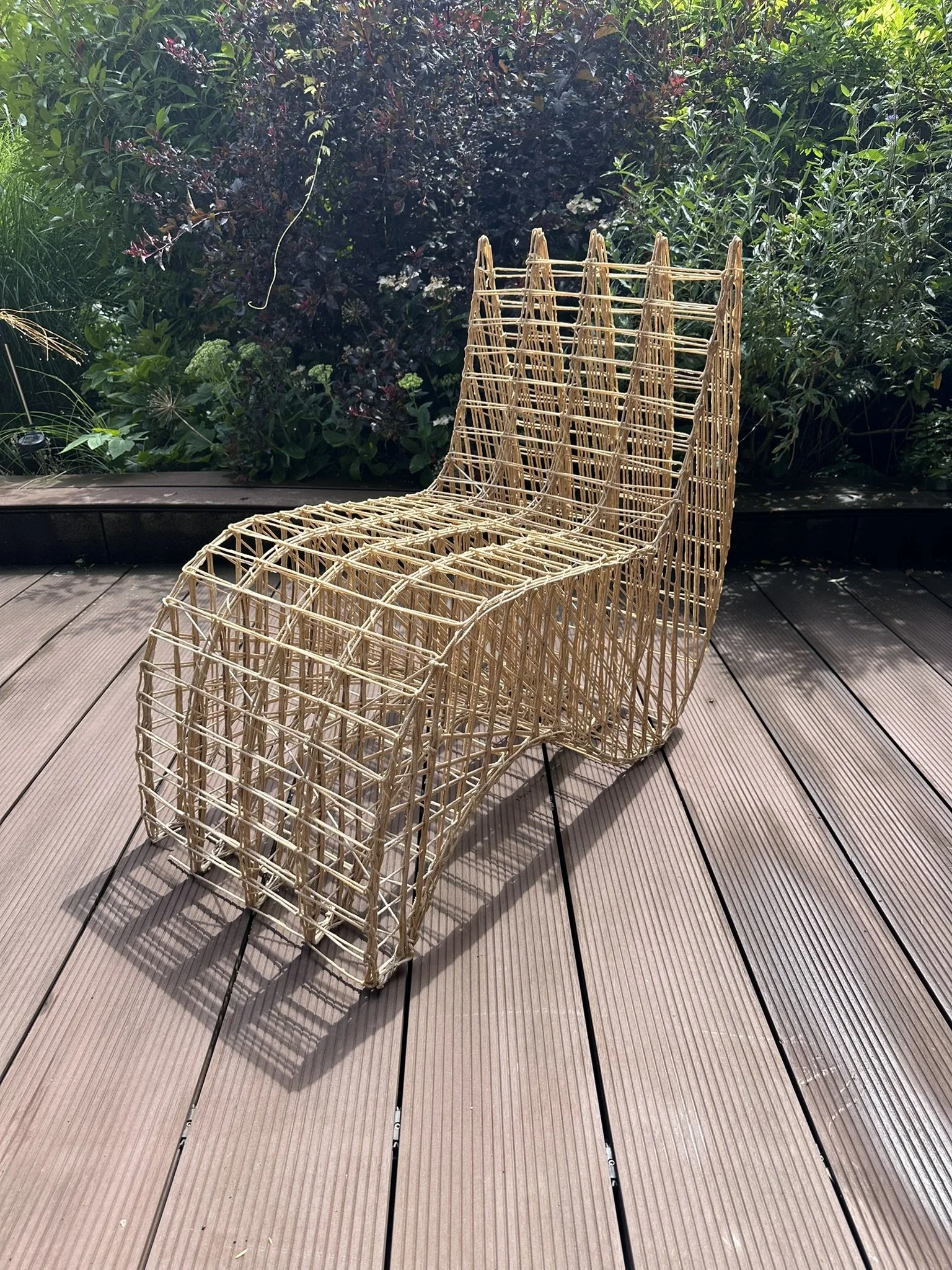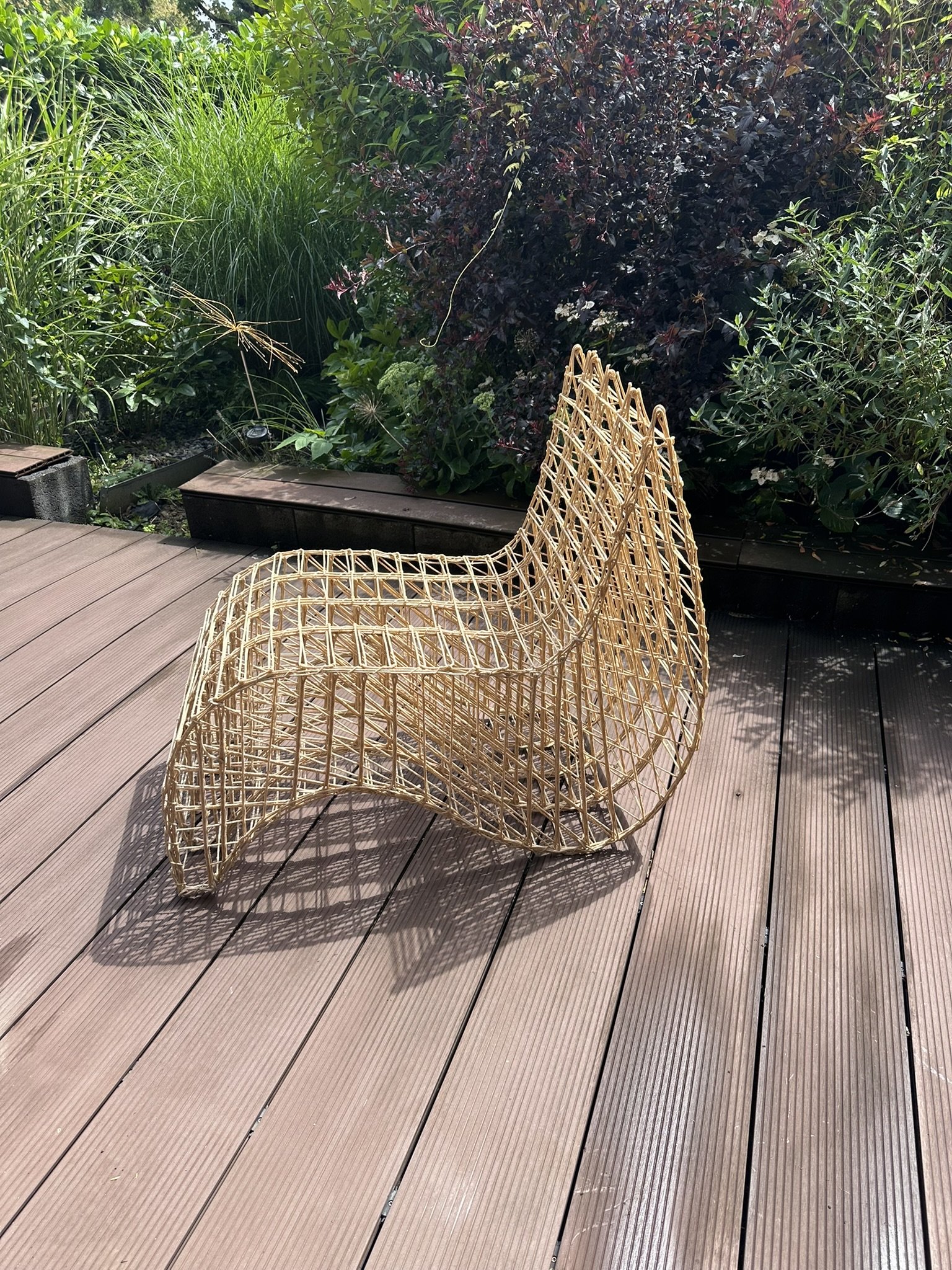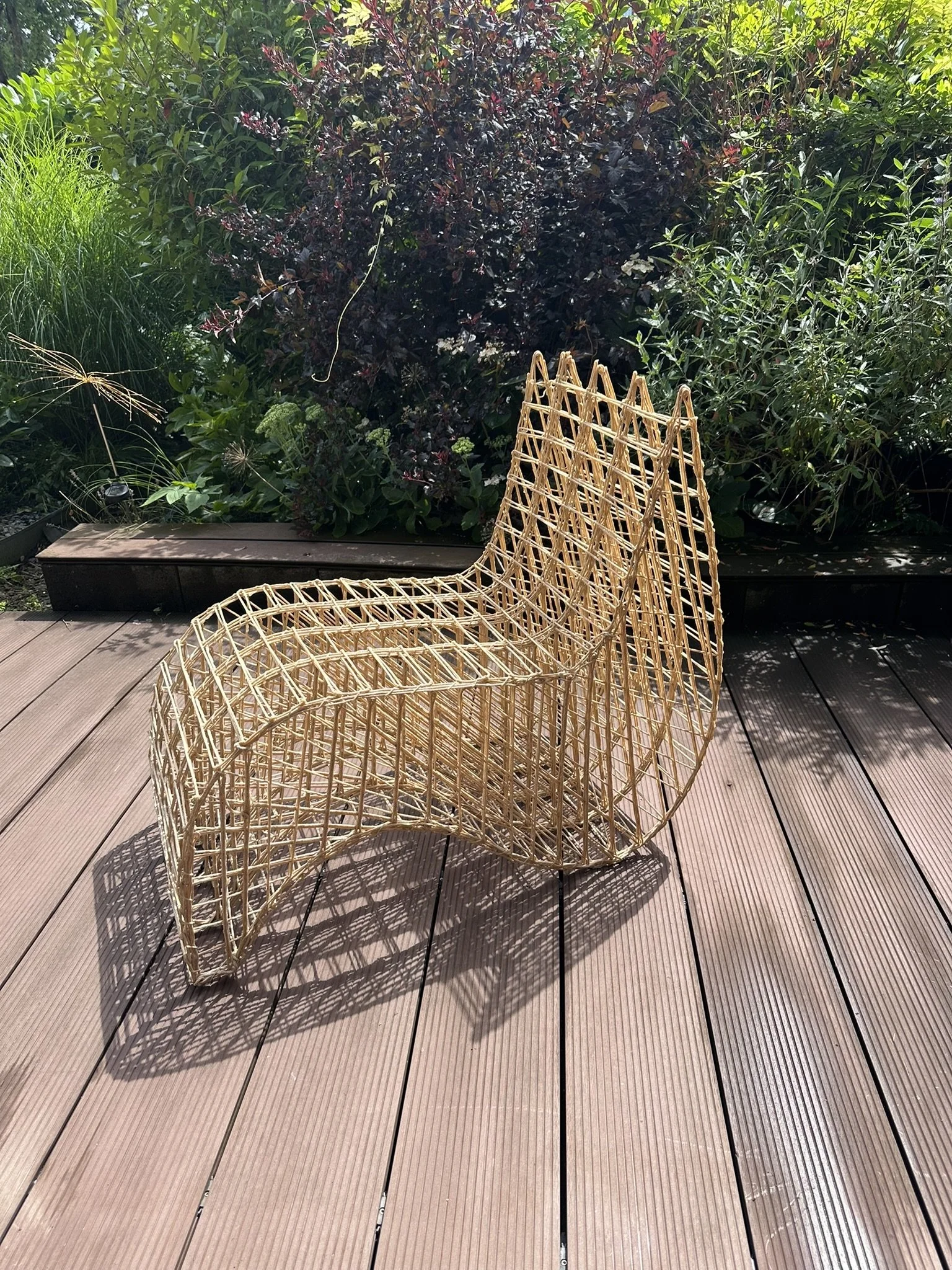

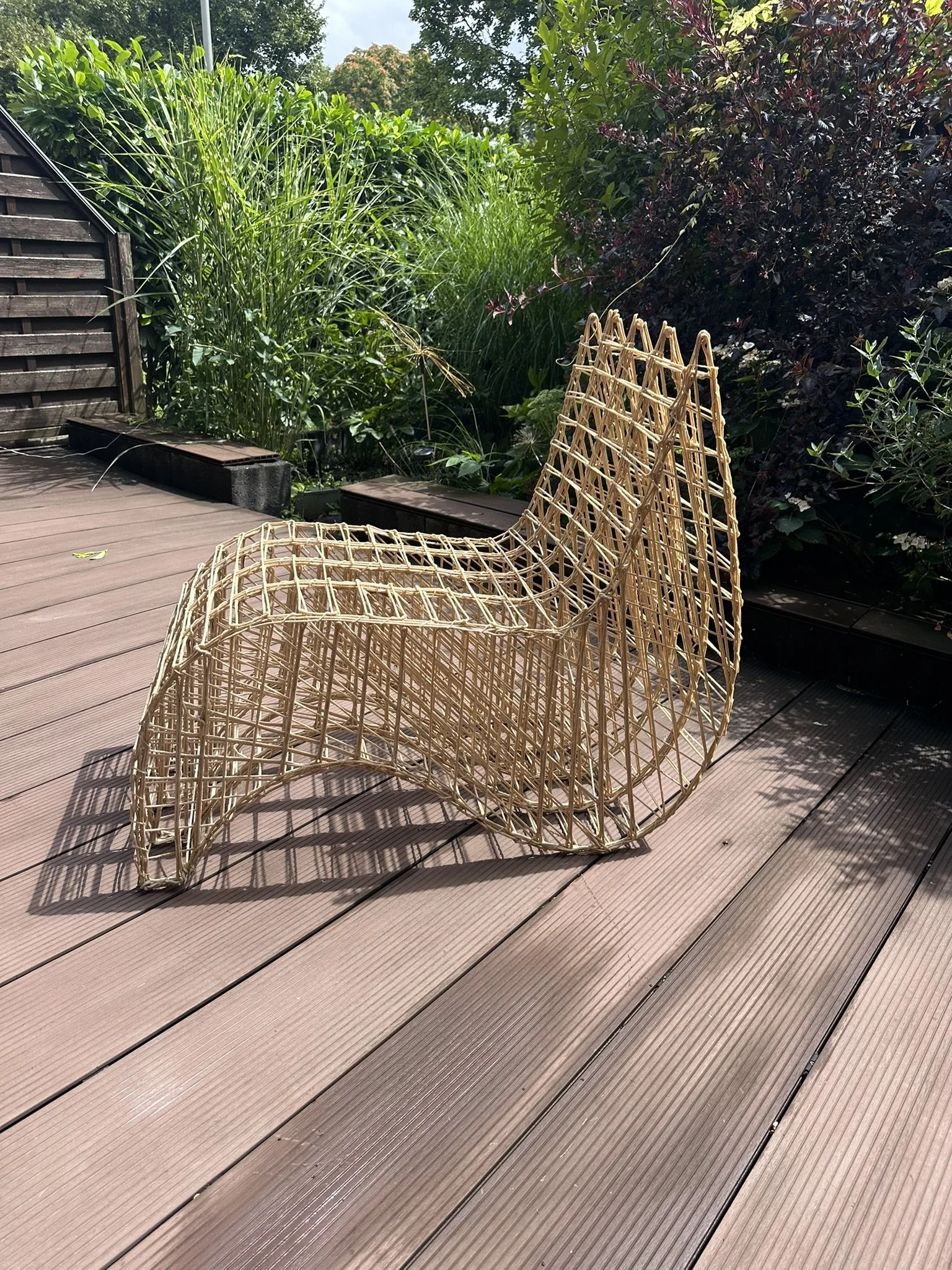
HEMP CHAIR
The concept of this fiber-wound biocomposite chair was initially conceived and developed at BioMat Studio, University of Stuttgart, as part of ongoing research into natural fiber composites, coreless filament winding, and sustainable structural design. The project was explored by students Sachin Gupta and Andre Kauffman during the Material and Structure design studio (SS 2016) at BioMat, University of Stuttgart, under the supervision of Assoc.-Prof. Dr.-Ing. Arch. Hanaa Dahy.
This design investigation focused on the transition from digital design to physical artifact, exploring how fiber directionality can be manipulated to enhance structural performance. The first iteration of the chair served as a full-scale prototype that revealed key lessons about fiber behavior, tension control, and the need for extensive prototyping. Challenges such as unintended deformations due to thermal effects on unrestrained fibers and suboptimal winding sequences highlighted the complexity of the material-system interaction.
These insights directly shaped the development of the second iteration, which emphasized simplified fabrication, optimized fiber-fiber interaction, and structural efficiency. Through the use of planar winding surfaces, fibers were laid under high axial tension—maximizing their load-bearing capacity in compression once cured. Tools such as zip ties and weights ensured adequate fiber compaction, minimizing delamination and improving overall material thickness and performance.
The resulting chair demonstrated a high strength-to-weight ratio, capable of supporting at least 23 times its own weight, and was constructed from an extremely minimal set of resources: natural fiber spools, resin, bolts, zip ties, a winding surface, and manual labor. Assembly was achieved through a straightforward weaving and resin application process, reinforcing the potential for low-tech, high-performance fabrication.
Following the academic phase, BioMat GmbH continued developing the concept for environmentally conscious, structurally robust furniture systems, refining winding strategies, material selection, and fabrication techniques. This project stands as a proof of concept, integrating themes of fibrous morphologies, biocomposites, and performative form-finding—pushing the boundaries of material and structural innovation in a single, usable object.