
RENEWABLE PAVILION ELEMENT
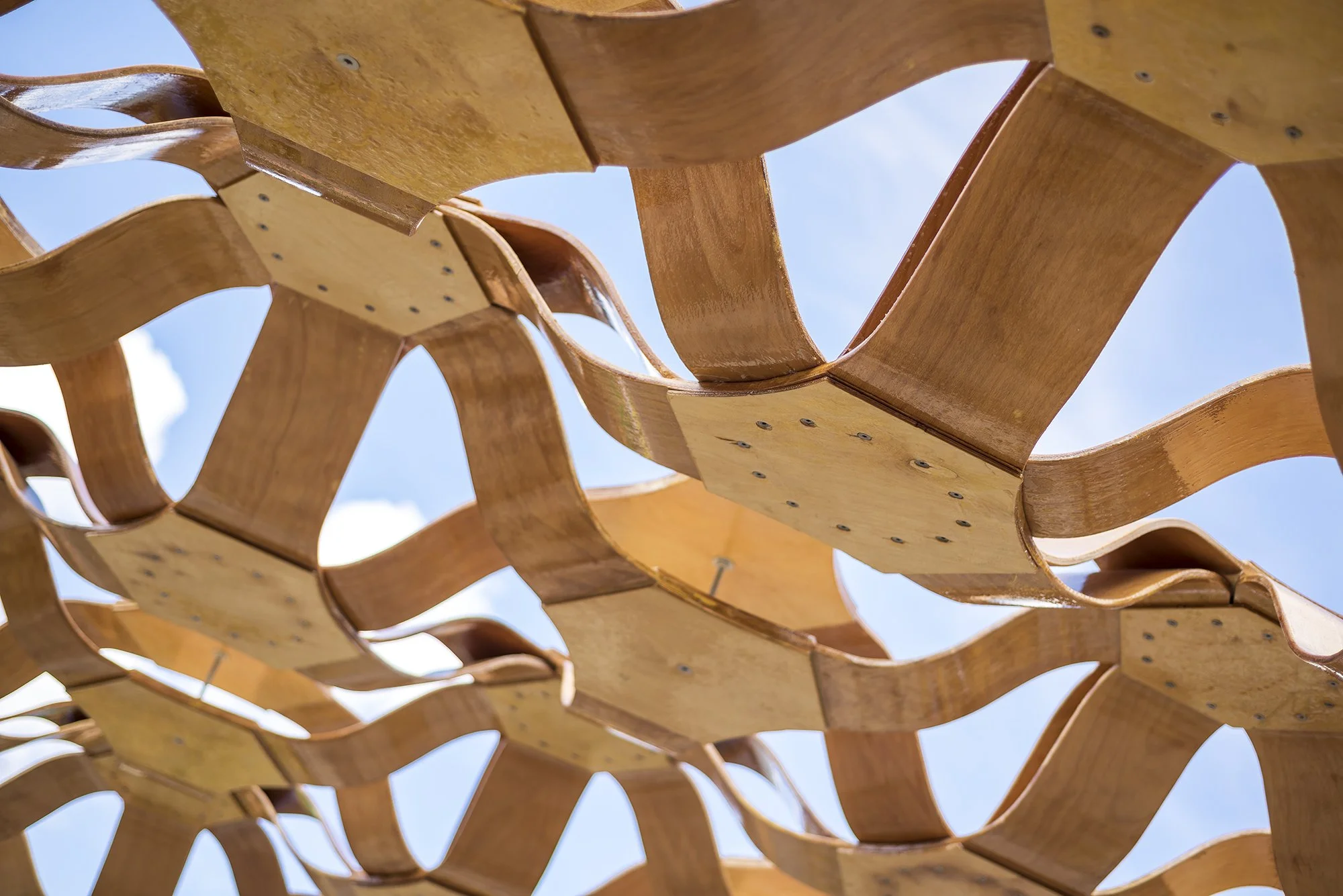
This design project was initiated and conceptually developed at BioMat Studio, University of Stuttgart, as part of an investigation into integrating renewable energy production into lightweight architectural structures. Conducted by student Reza Sadeghi during the Flexible Forms seminar (SS 2018), the project focused on redesigning the BioMat team’s research pavilion at the ITKE Institute to incorporate energy-harvesting systems while maintaining its architectural integrity.
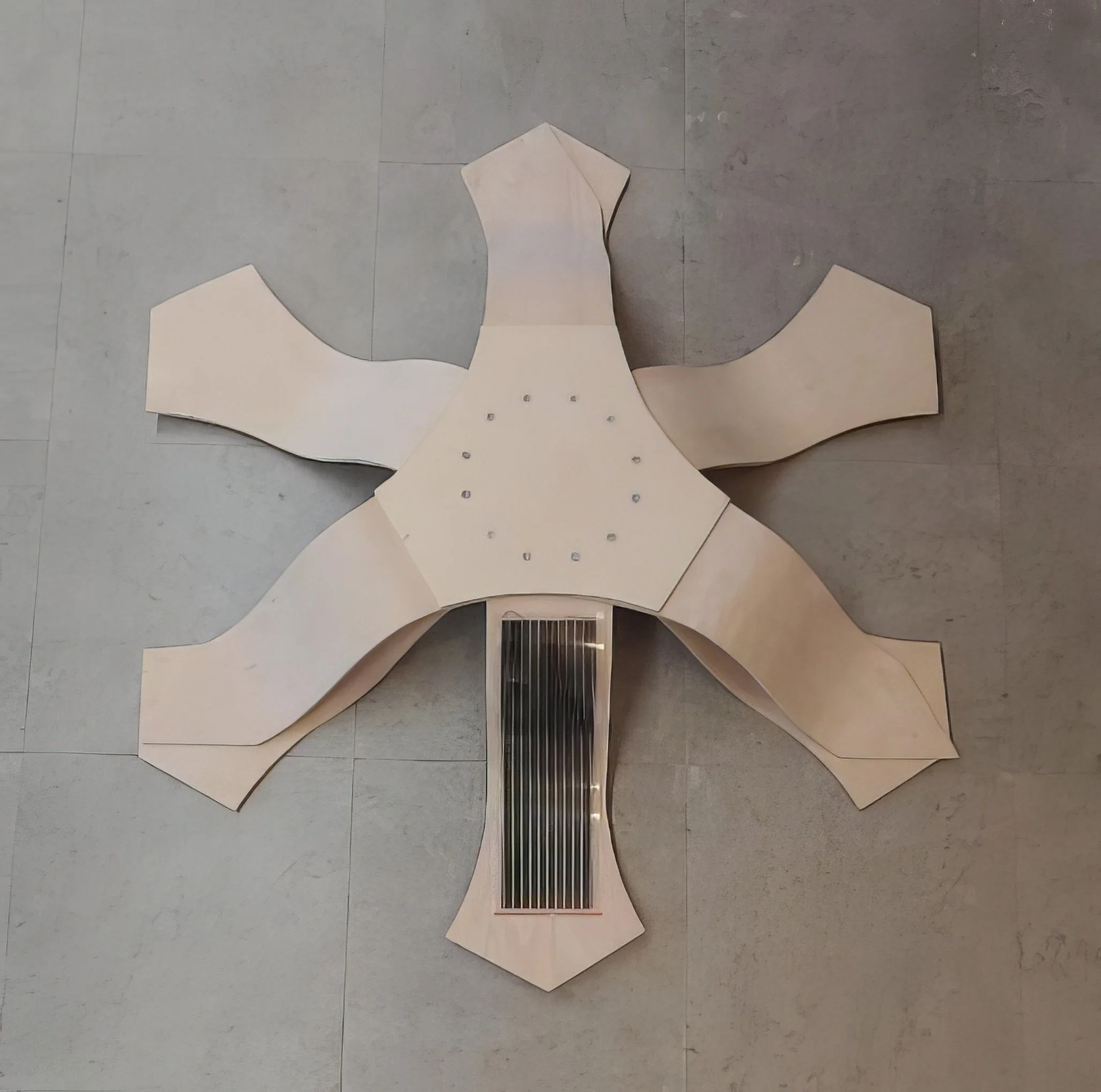
The research began with an analysis of various renewable energy sources, evaluating their performance requirements throughout the year and assessing their compatibility with the pavilion’s location. Different energy production modules were tested for efficiency, output stability, and visual integration with the structure. The design process sought to harmonize the chosen modules with the pavilion’s overall form while preserving its aesthetic and spatial qualities.
The final proposal featured an integrated energy-harvesting system capable of powering LEDs, charging mobile devices, or running small electronics such as Bluetooth speakers. The working prototype demonstrated the potential for combining architectural design with decentralized, sustainable energy production—highlighting the role of built structures as active contributors to environmental performance rather than passive consumers of resources.